








“Good afternoon, I would like to open a bank account.” The response is familiar.
You can open an account online or visit a branch.
Bring your ID.
Bring passport photographs.
Provide your BVN, NIN, Ghana Card, or national ID number.
Fill multiple forms.
Upload documents.
If online, still visit the branch to validate originals.
If any branch is waiting in a queue.
If everything goes smoothly, the account may be opened in a few days.
What makes this ironic is that most of the documents being requested are not created by the bank. They are government-issued or third-party verified identity systems. The heavy lifting of identity validation has already been done elsewhere.
Yet the customer is required to manually transport proof from one institution to another.
This is not simply bureaucracy. It is architectural inertia.
When institutions do not integrate directly with trusted identity providers, the user becomes the courier of compliance.
Time is consumed not because verification is impossible, but because systems are not connected.
In many markets across Africa, this has been normalised. Opening an account is expected to take time. Physical presence is treated as validation. Repetition of forms is treated as due diligence.
But digital banking should not replicate analogue processes inside an app.
At KiiBank, we approached onboarding as a system design question.
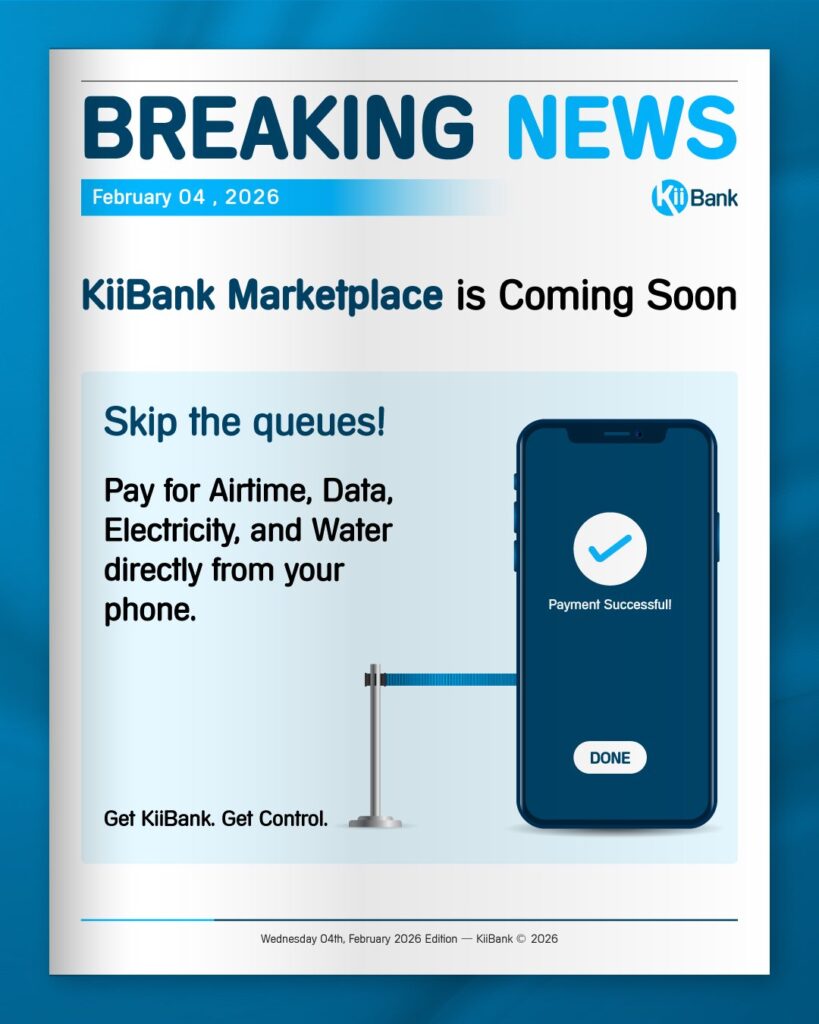
If a trusted identity authority has already verified a citizen’s data, the logical next step is secure digital verification — not re-collection of the same information through paper and branch visits.
By connecting directly with required KYC document providers, verification can happen in minutes rather than days. The objective is not to bypass compliance. It is to align compliance with modern infrastructure.
Regulatory standards remain intact.
Identity validation remains rigorous.
But unnecessary friction is removed.
Banking should not test patience.
It should respect time.
When opening an account requires multiple days in a digital era, the issue is not regulation — it is integration.
The future of African banking will depend less on new features and more on how intelligently institutions integrate with existing identity infrastructure. Where is friction still being passed to the customer?
hashtag#DigitalBanking hashtag#FinancialInfrastructure hashtag#FintechAfrica hashtag#KYC