







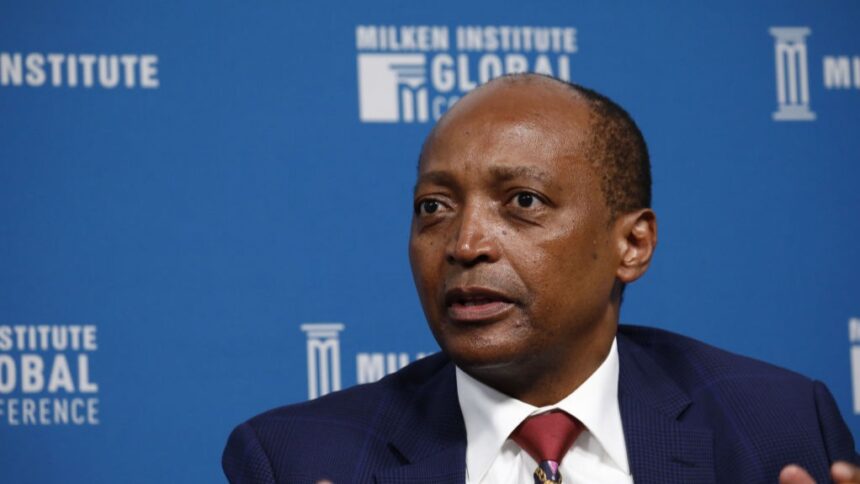
South African mining magnate and billionaire Patrice Motsepe has relinquished his role as Executive Chairman of African Rainbow Minerals (ARM), the $2.7 billion company he founded, in a move to comply with updated governance requirements from the Johannesburg Stock Exchange (JSE). The leadership transition sees Motsepe assume the role of non-executive chairman, effectively separating the board’s oversight function from the company’s executive management.
This structural realignment is a direct response to prevailing regulatory reforms aimed at bolstering corporate governance across listed entities, particularly the requirement for clear separation between the roles of Chairman and Chief Executive Officer (or equivalent executive leadership). The shift, while regulatory-driven, has significant implications for ARM’s operational strategy, investor confidence, and the enduring influence of its founder.
Merits of the Leadership Shift
The decision to appoint Motsepe as non-executive chairman brings several substantial benefits, primarily centered on enhanced governance and corporate structure.
1. Enhanced Corporate Governance and Compliance
| Merit | Description |
|---|---|
| JSE Compliance | Direct adherence to new JSE governance rules, mitigating regulatory risk and potential penalties. This signals ARM’s commitment to best practice standards. |
| Clear Separation of Powers | Formal division between the board’s strategic oversight (Non-Executive Chairman) and the executive’s day-to-day management (CEO). This prevents undue concentration of power. |
| Improved Board Independence | Allows the board to exercise more rigorous, independent scrutiny of executive performance and corporate strategy without the founder simultaneously holding the top executive post. |
| Reduced Key-Man Risk | The structural change forces a greater delegation of executive authority, reducing the operational reliance on Motsepe and helping to build a deeper, more resilient management bench. |
2. Strategic and Reputational Advantages
| Merit | Description |
|---|---|
| Retention of Founder’s Vision | By staying on as Non-Executive Chairman, Motsepe retains a crucial role in shaping ARM’s long-term strategy and ensuring the company remains true to its founding principles and social mandate. |
| Investor Confidence | Compliance with governance norms is often viewed favorably by institutional and international investors, potentially improving ARM’s attractiveness and cost of capital. |
| Stakeholder Management | Motsepe’s continued presence and influence—spanning mining, finance, and his role as President of the Confederation of African Football (CAF)—remains an asset for high-level government relations and major stakeholder engagement across Africa. |
Demerits and Potential Challenges
Despite the clear governance benefits, the transition presents certain challenges, particularly concerning execution and the practical application of the founder’s ongoing influence.

1. Potential for Operational Conflict
| Demerit | Description |
|---|---|
| Founder Influence Paradox | Although non-executive, Motsepe’s status as a billionaire founder and majority shareholder means his influence might still overshadow the executive team, potentially blurring the lines of authority for the new CEO. |
| Executive Autonomy Constraint | A strong, long-serving founder as Non-Executive Chairman might inadvertently constrain the new executive team’s ability to introduce significant strategic departures or reforms, leading to a perceived lack of full executive empowerment. |
| Slowed Decision-Making | The need for executive decisions to be vetted by a powerful non-executive chairman can occasionally slow down agile decision-making, particularly in the fast-moving, capital-intensive mining sector. |
2. Market Perception and Succession Risk
| Demerit | Description |
|---|---|
| Loss of Executive Profile | Motsepe was a highly recognizable, influential face of the company. Removing him from the executive function means the company may lose some of its immediate high-level political and business negotiation leverage. |
| Succession Uncertainty | While the immediate executive leadership may be confirmed, the market may scrutinize whether the transition is a genuine transfer of operational power or merely a title change, maintaining underlying succession risk. |
| Potential for Board Stagnation | If the non-executive board, under Motsepe’s leadership, becomes overly deferential, the promised increase in independent oversight may not materialize, leading to board stagnation rather than dynamism. |
Conclusion
Motsepe’s shift to Non-Executive Chairman at ARM is a necessary and positive step toward modernizing the company’s corporate governance structure and ensuring regulatory compliance. It formalizes a separation of duties crucial for large, listed entities. The successful execution of this move will depend heavily on the ability of the new executive team to operate with genuine autonomy and the willingness of Motsepe to embrace his new role as a strategic mentor and oversight leader rather than a daily operational chief. The move effectively trades concentrated executive power for institutional governance stability, a balance that is essential for a company of ARM’s size and strategic importance on the African continent.