






WASHINGTON — In a landmark decision, the Supreme Court delivered a significant setback to President Donald Trump’s trade policy, ruling on Friday that the administration exceeded its statutory authority in imposing sweeping tariffs under the guise of a national emergency. The 6-3 ruling specifically invalidated the use of the 1977 International Emergency Economic Powers Act (IEEPA) as a basis for the broad-ranging duties implemented by the administration.
The majority opinion held that the President’s aggressive and widespread application of tariffs on a global basis was not countenanced by the specific language and intent of the IEEPA, a law primarily reserved for genuinely urgent national security or foreign policy crises. The ruling immediately invalidates a large swath of the tariffs imposed by the Trump administration, though notably, it does not strike down all of them. Trump Lashes Out at the Judiciary
The reaction from the White House was swift and acrimonious. Speaking shortly after the decision was released, President Trump launched a harsh critique of the Supreme Court’s majority, branding the ruling a “disgrace to our nation.” He went on to describe the justices who joined the majority as “very unpatriotic and disloyal to the Constitution,” and suggested, without evidence, that they had been “swayed by foreign interests” in their decision-making.
Despite the judicial defeat, the President immediately vowed to press on with his protectionist trade agenda. The ruling’s scope is limited to the IEEPA; it does not affect the administration’s ability to impose tariffs using other existing statutory authorities, such as those related to national security (Section 232 of the Trade Expansion Act of 1962) or unfair trade practices (Section 301 of the Trade Act of 1974). Trump stated emphatically that he plans to utilize these unaffected authorities to impose new duties on a global scale. Specifically, he announced plans to “soon implement a 10% global tariff,” which he characterized as a reduction in duties for almost all foreign nations compared to the previous structure. Economic Reaction and Judicial Alignment

In a counterpoint to the administration’s rhetoric about the economic benefits of the duties, U.S. markets reacted positively to the news. Stock indices rallied sharply upon the announcement of the Supreme Court’s decision, signaling investor relief over the prospect of reduced trade uncertainty and lower import costs.
The majority opinion in the case was authored by Chief Justice John Roberts, who was joined by an unusual coalition: the Court’s three liberal justices, along with two of his fellow conservatives, Justices Neil Gorsuch and Amy Coney Barrett. This configuration underscores the non-ideological, statutory-interpretation nature of the dispute.

In the opinion, Chief Justice Roberts directly challenged the President’s claimed authority: “The president asserts the extraordinary power to unilaterally impose tariffs of unlimited amount, duration, and scope,” he wrote. However, the Chief Justice noted that the Trump administration “points to no statute” where Congress had previously granted the Executive Branch the authority to use the specific language in IEEPA to impose tariffs. Roberts concluded unequivocally: “We hold that IEEPA does not authorize the president to impose tariffs.”
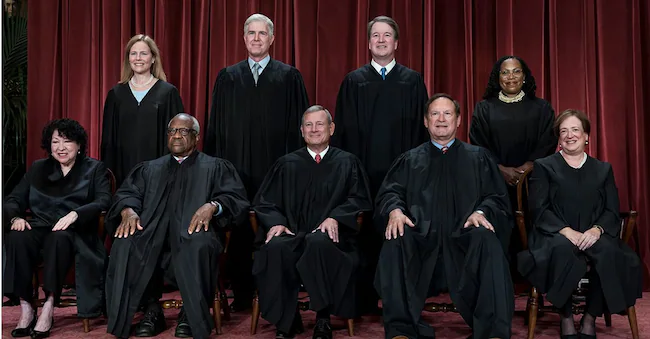
Dissenting from the majority were Justices Clarence Thomas, Brett Kavanaugh, and Samuel Alito.
The decision represents a rare and significant legal setback for the administration at the Supreme Court, particularly given the Court’s 6-3 conservative majority since President Trump began his second term in January. Relief for Businesses and Scope of the Ruling
Business owners who had borne the costs of the IEEPA-based tariffs and had challenged them in court expressed immediate relief. Victor Schwartz, who runs the New York-based wine and spirits importer VOS Selections, released a statement applauding the decision. “These new tariffs were arbitrary, unpredictable, and bad business,” Schwartz said. “Thankfully, courts at every level recognized these duties for what they were: unconstitutional government overreach,” he added, referring to the various lower court victories that preceded the Supreme Court’s final ruling.
Related News


Crucially, the decision does not affect all of the Trump administration’s tariffs. It leaves in place duties imposed on goods like steel and aluminum, which were implemented under different laws (specifically, Section 232). However, the ruling effectively upends tariffs in two specific and economically significant categories:
- Country-by-Country or “Reciprocal” Tariffs: This category included tariffs ranging from a high of 34% on goods from China down to a 10% baseline duty applied to products from the rest of the world.
- Fentanyl-Related Tariffs: The ruling also invalidates the 25% tariff the administration had imposed on select goods imported from Canada, China, and Mexico. These duties had been justified by the administration as a response to these nations’ alleged failure to adequately curb the flow of fentanyl into the United States.