






A perilous new chapter has begun in the long-running conflict between Afghanistan and Pakistan. The two nations are engaged in a fresh wave of deadly shelling and mortar fire across their rugged, porous border. Pakistan’s defense minister has declared the nation’s “patience had run out,” escalating the rhetoric to “open war” against its neighbor, governed by the Taliban.
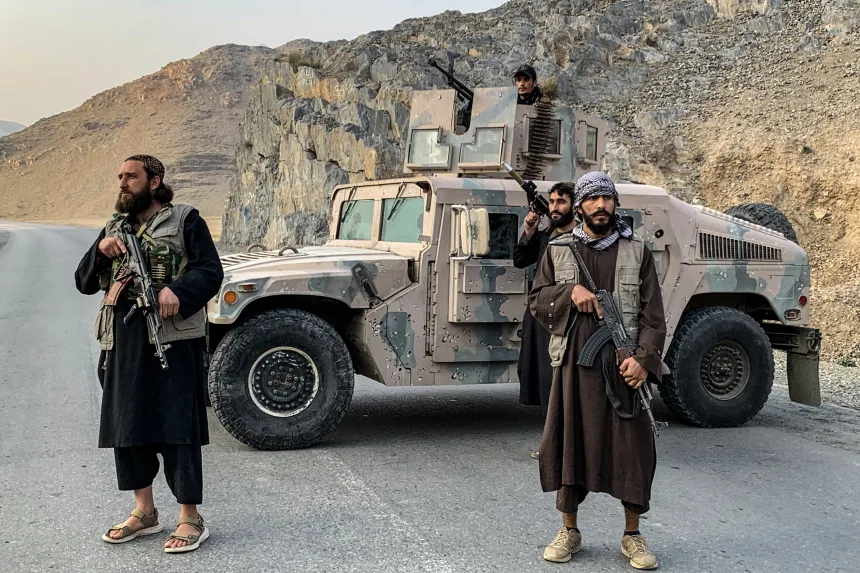
This latest flare-up pits Pakistan’s well-funded, nuclear-armed military against seasoned Afghan Taliban fighters—the same group that secured a victory over US and NATO forces in 2021 after a decades-long insurgency. The violence threatens to severely exacerbate regional instability.The Latest Escalation: How the Violence Started
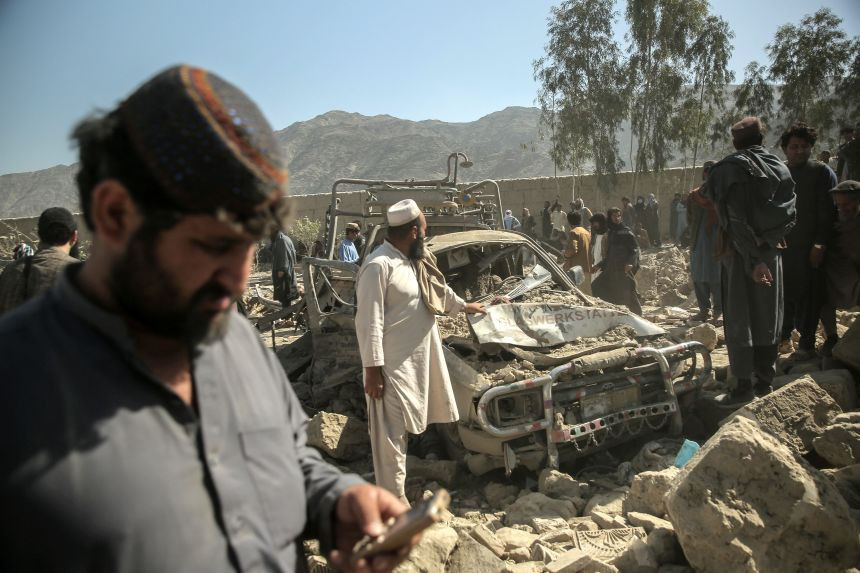
The current round of fighting began late Thursday night when the Taliban’s military initiated attacks on Pakistani positions along various sections of the disputed 1,600-mile border. Kabul claims these attacks were a direct response to Pakistan’s weekend airstrikes on alleged militant camps inside Afghanistan, which reportedly killed at least 18 people.
In retaliation, Pakistan launched “Operation Righteous Fury” (Ghazab Lil Haqq) early on Friday. Pakistani airstrikes targeted significant locations, including the capital, Kabul, the southeastern province of Paktia, and Kandahar—the Taliban’s spiritual heartland and believed base of their secretive leader, Hibatullah Akhundzada. Pakistan confirmed these strikes targeted Afghan Taliban defense facilities, marking a significant strategic escalation.

A Kabul resident described the terror of being woken by a loud explosion: “I was terrified… Then we heard gunfire. When we looked out of our apartment window, we saw bullet-like flames going up in the sky.” The resident noted she remained awake at 5 a.m., fearing further attacks, observing that “every Kabul resident is sitting in fear of being hit by a bomb.”
The casualty figures from Friday’s offensive are disputed. Pakistan claimed to have killed 133 Afghan Taliban fighters, while Afghanistan reported the deaths of eight of its soldiers. Verification in the remote region remains difficult. Meanwhile, in Pakistan’s northwestern Bajaur district, a mortar shell fired by the Afghan Taliban injured five people, including two children and a woman.A Complicated History and the Surge in Violence



The current conflict is the continuation of a complicated history between the two countries, despite shared cultural and economic ties. A fragile ceasefire had been in place since a major clash last October, which was the deadliest conflict in years.
Pakistan was a primary supporter of the Afghan Taliban after NATO forces ousted them in 2001. Taliban fighters found refuge and logistical support across the border in Pakistan for their insurgency against the US-backed Afghan government.
However, since the Taliban’s return to power in Kabul following the US withdrawal, Pakistan has faced a surge in Islamist violence, primarily blamed on the Pakistani Taliban (TTP). Islamabad accuses Kabul of granting sanctuary to TTP militants on Afghan soil—an accusation the Afghan Taliban denies.
The violence has intensified significantly, with over 1,200 people—both military and civilian—killed in militant attacks across Pakistan in 2025, double the figure from 2021. Many of these attacks utilize US weapons abandoned during the chaotic withdrawal. Pakistan’s Defense Minister Khawaja Asif conceded in November that the violence was a form of “blowback,” noting that many Afghan Taliban figures still maintain property and families in Pakistan.
Related News


Asif took to X on Friday to vehemently accuse Afghanistan of harboring “all the terrorists of the world” and “exporting terrorism.” He concluded: “Our patience has run out… Now it is open war between us and you.”Military Asymmetry
The military forces of the two countries show a stark disparity, as detailed in the International Institute for Strategic Studies’ (IISS) “Military Balance 2025.”
Pakistan’s Military Strength:
- Status: A nuclear power, with the military being the country’s most powerful institution.
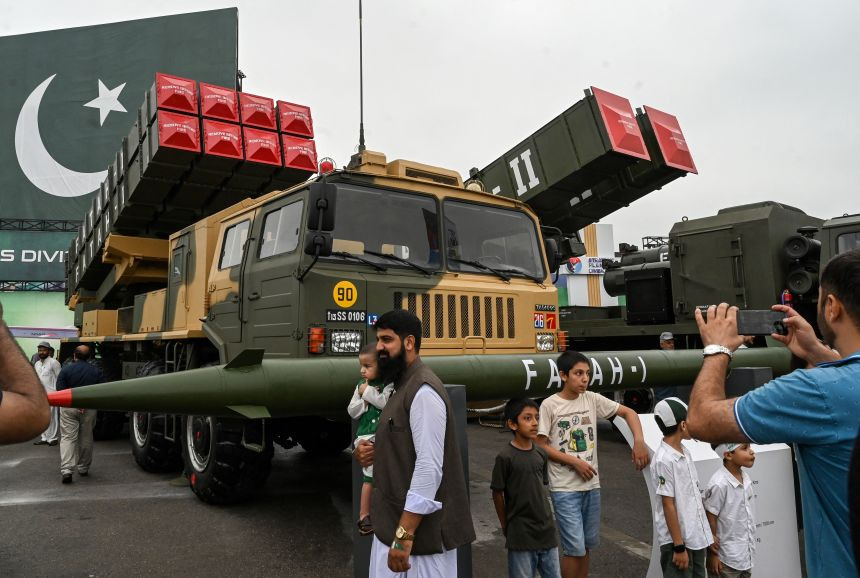
- Personnel: Approximately 660,000 active-duty troops, supported by nearly 300,000 paramilitary and military police.
- Arsenal: A sophisticated defense apparatus including US-made F-16 fighter jets, French Mirage jets, and the JF-17, co-produced with China, Islamabad’s key defense partner.
The Afghan Taliban Force:
- Status: A singular, unified force.
- Personnel: Estimated at fewer than 200,000 personnel.
- Arsenal: Lacks a functional air force, relying on a small number of aging Soviet-era attack helicopters and transport aircraft abandoned by the US, alongside quadcopter drones.
- Defining Identity: Their strength lies in their ideological rigidity, religious fervor, and decades of experience with asymmetric warfare and guerrilla tactics, rather than heavy conventional weaponry.
Future Outlook
While previous escalations have often subsided after a few days, often through mediation by nations like Saudi Arabia and Turkey, analysts fear the potential for greater instability.
Samina Ahmed, the Crisis Group’s senior project director for South Asia, warns: “Pakistan has made clear it will act again if the Afghan Taliban fail to move against TTP leaders and fighters on Afghan soil.” She urged the two sides to “urgently resume negotiations, with facilitation from trusted partners such as Turkiye, Qatar and Saudi Arabia.”