






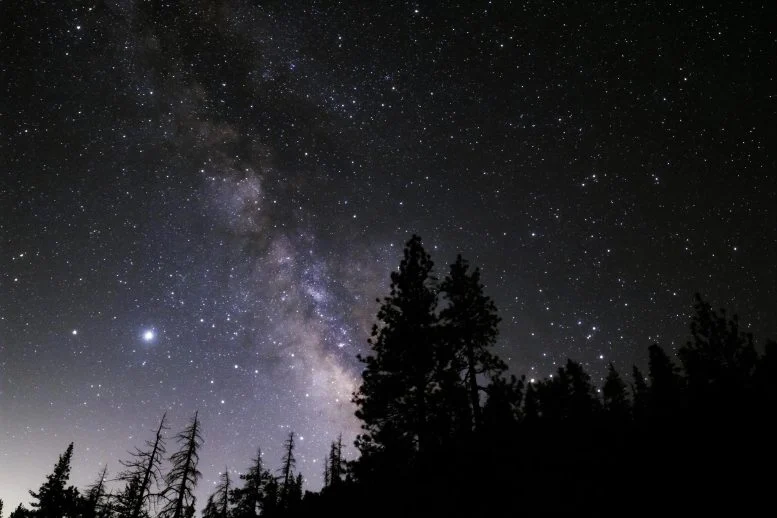
This weekend marks a truly rare celestial event as six of our solar system’s planets align in a stunning “planetary parade” visible across the night sky, drawing the attention of sky-watchers and astronomers worldwide. Experts confirm that for a period of a few days, Jupiter, Saturn, Venus, Mercury, Neptune, and Uranus will all appear simultaneously. While the brilliance of the four closer planets will make them easily observable, binoculars or a telescope will be necessary to properly view the faint and distant Neptune and Uranus.
In honor of this cosmic alignment, the National Aeronautics and Space Administration (NASA) has offered a unique way to experience the event. The space agency has released new sonifications—a process of translating astronomical data into sound—from its Chandra X-ray Observatory for Jupiter, Saturn, and Uranus, allowing listeners to hear the data collected from these worlds.The Science Behind the Alignment
Dr. Megan Argo, a respected reader in astrophysics at the University of Lancashire, explained the rarity of this planetary gathering. “We’re seeing this alignment now because the planets’ orbits have brought them into roughly the same area of the sky from our perspective on Earth,” she noted.
The planets orbit the Sun at vastly different speeds, meaning their positions against the distant stars are constantly shifting. It is only on rare occasions that their individual orbital paths converge to place multiple planets together in our visible night sky.

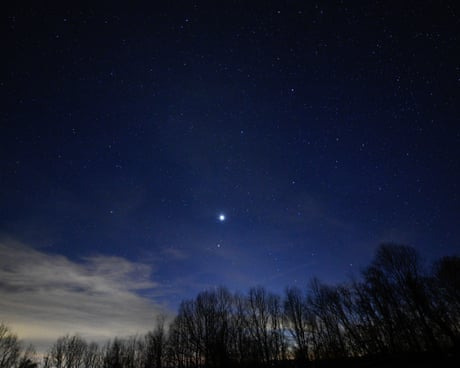
While it is relatively common to observe four or five planets simultaneously, seeing six is considered a much more exceptional occurrence. For context, Dr. Argo mentioned that all seven visible planets were aligned in the sky just last year. However, the next complete, full alignment of the solar system’s major planets is not predicted to happen again until 2040, making this current six-planet parade a significant event to witness. Optimal Viewing Times and Tips
Dr. Argo specified that the peak visibility of all six planets centers around February 28th and the days immediately surrounding it. However, she noted that the visibility of certain planets will change quickly. Mercury, for example, will become much harder to spot by midweek, while brilliant giants like Jupiter and Venus will remain easily visible for months to come.
For those eager to catch a glimpse of the parade, timing and location are key. Dr. Argo advises heading outside in the early evening—approximately 5:45 pm in the UK and 6:00 pm in the US. The ideal viewing spot requires a clear, unobstructed view to the west, with a higher vantage point, such as a hilltop, being preferable.
The planets will appear to trace a curved line across the heavens. In the northern hemisphere, the arrangement will be as follows:
- Jupiter will be positioned high in the south-east.
- Mercury, Saturn, Neptune, and Venus will cluster closer to the western horizon.
- Venus will stand out as the brightest object in this cluster.
- Mercury will be fainter and positioned slightly to the right of Venus.
- Saturn and Neptune will appear a little higher up.
- Uranus will be faint and located beneath the prominent star cluster known as the Seven Sisters (Pleiades).
A stargazing application on a smartphone can be invaluable for locating the fainter Uranus. While binoculars can enhance the experience of spotting the more distant planets, Dr. Argo issued a critical safety warning: never look at the Sun through binoculars or a telescope, as this can result in immediate and permanent eye damage.Visibility Across the Globe
Dr. Ed Bloomer, an astronomer at the Royal Observatory, Greenwich, confirmed that the alignment will also be visible in the southern hemisphere, following a similar pattern. However, the orientation of the parade will appear reversed compared to the northern hemisphere’s perspective.
Dr. Argo offered specific guidance for viewers in the southern hemisphere: “In Australia, Jupiter will be seen in the north, and Uranus will be visible in the north-west just above the Seven Sisters.” Due to the slightly later sunset times in Australia, viewers should plan to go outside after 6:45 pm local time. Time, however, will be of the essence: Mercury will be extremely close to the horizon at sunset, making it unlikely to be visible, and Venus will set by 7:15 pm.
Adding to the spectacle, Dr. Argo noted that the Moon is also participating in the celestial display over the current few nights. “We’ve also got the moon in the mix actually tonight and over the next couple of days. So we get quite a lot of the visible solar system,” she concluded, promising an unforgettable few nights for anyone who looks up.