






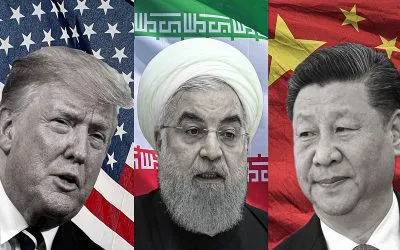
Beijing’s measured diplomatic response to the escalating US-Iran standoff should not be misinterpreted as unreliability or indifference toward its close partner, Tehran.
Despite deep bilateral ties, China has avoided offering strong, outward support to Iran amidst the ongoing US military build-up in the Gulf. Instead, Beijing has consistently advocated for diplomacy and regional security. This position was reaffirmed on February 24th by China’s Foreign Ministry spokesperson, who called on “various parties [to] exercise restraint and resolve differences through dialogue.”
For some observers, China’s seemingly neutral stance—emphasizing restraint and dialogue in the face of US threats—may suggest a reluctance to support Tehran, reinforcing the perception that Beijing is an unreliable ally. This view is compounded by China’s inaction after the US kidnapped its close partner Nicolás Maduro and took control of Venezuela’s oil sector, where China had substantial investments.
However, this restraint is consistent with China’s long-standing policy of avoiding military backing for Iran. Even as a comprehensive strategic partner, Beijing criticized but did not materially support Iran during the 2025 12-day war. Furthermore, China supported UN-led economic sanctions against Iran prior to the 2015 nuclear deal and has been slow to inject promised investment into the Iranian economy.

China views its relationship with Iran as a “long game,” believing that the US’s “maximum pressure” campaign may inadvertently advance Beijing’s strategic interests. Questioning Reliability: The Appearance of Absence.
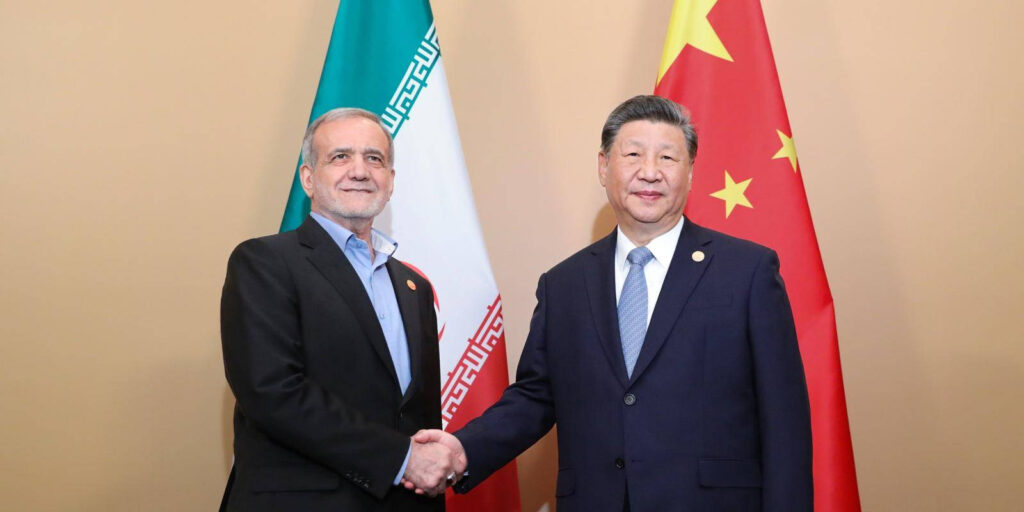
Beijing’s cautious statements have prompted questions about its dependability in supporting allies in need. Western observers, in particular, find China’s reserved position surprising given the close relationship, formalized by the 2021 25-year comprehensive strategic agreement.



China is a crucial economic lifeline for sanction-hit Iran. In 2025, it purchased over 80% of Iran’s seaborne oil at a deep discount, constituting 13.5% of all of China’s seaborne oil imports. Beijing has also helped reduce Iran’s political isolation by granting it membership in BRICS+ and the Shanghai Cooperation Organisation.
Moreover, China’s lack of assertive action seems to undermine its own rhetoric of a multipolar world order and its challenge to US global hegemony. Beijing frames its worldview with the slogan, ‘the East is rising, and the West is declining,’ and its Global Security Initiative, yet it has shown little concrete initiative to assert itself or push for a decline in US influence in the Middle East. Indeed, following October 7th, China has largely remained on the periphery, offering little beyond criticism of Israel over Gaza and condemnation of US unilateral force against Iran. The limited responses to both the 12-day war and current US pressure have therefore challenged previous narratives of China’s increasing influence in the region. Underlying Objectives: The Nuclear Issue
This assessment of China’s reliability is premature and overlooks Beijing’s core, long-term objectives regarding Tehran and the nuclear negotiations.
Firstly, China publicly opposes Iran’s development of nuclear weapons, even while respecting its right to the peaceful use of nuclear energy as a signatory to the Non-Proliferation Treaty. While officially still part of the JCPOA, Beijing supports a new agreement on the nuclear issue.



China’s primary concern is that a nuclear-armed Iran could trigger a regional war, which would endanger vital shipping lanes and obstruct China’s oil imports from the Gulf. Such a conflict could also lead to attacks on Gulf states, where China’s commercial interests are far greater than its ties with Tehran. A nuclear Iran would fundamentally shift the regional balance of power, potentially restraining future US or Israeli military action. This could destabilize the Middle East for generations by triggering a regional nuclear arms race. Crucially, it could also encourage China’s regional rivals—like Japan, South Korea, and Australia—to seek nuclear deterrence against Beijing’s growing assertiveness.
Therefore, US diplomatic efforts to halt Iran’s nuclear breakout potential in exchange for sanctions removal align with China’s preference for a peaceful resolution. Although Beijing publicly opposes any strikes on Iran or infringement of its sovereignty, it may be willing to tolerate limited, US-Israeli military action as a negotiating lever, provided it secures a diplomatic solution to the nuclear issue without causing a full-scale regional war. Capitalizing on Weakness
Secondly, China perceives a weakened Iranian regime as both a risk and an opportunity. Beijing does not want a regime collapse leading to a Western-aligned government. However, it can exploit Iran’s vulnerability to increase the regime’s dependence on China.
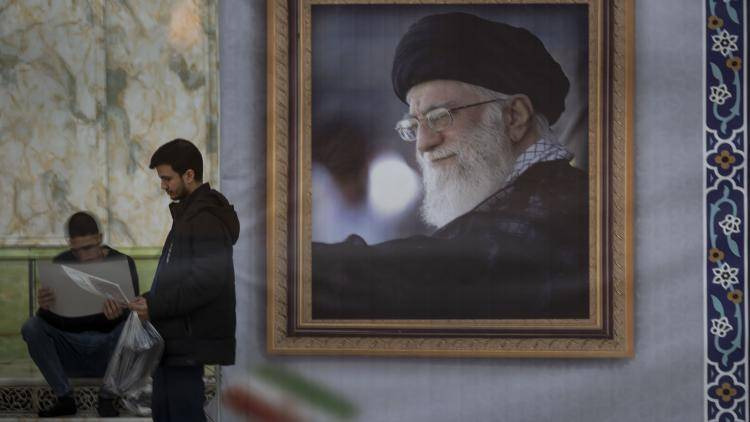
Both Supreme Leader Ayatollah Ali Khamenei and Iranian President Masoud Pezeshkian have strongly emphasized the importance of the relationship with China. During his August visit to Beijing, President Pezeshkian underscored Tehran’s commitment to implementing the 25-year comprehensive cooperation agreement.
China may intensify exports of dual-use technology, which could assist in rebuilding aspects of Tehran’s missile and drone capabilities. Nevertheless, reports of China potentially selling advanced military hardware, such as air defense systems, fighter jets, or supersonic anti-ship missiles, should be treated cautiously. China has not confirmed these sales, and Iran has a vested interest in overstating the depth of bilateral relations to enhance its own deterrence.