







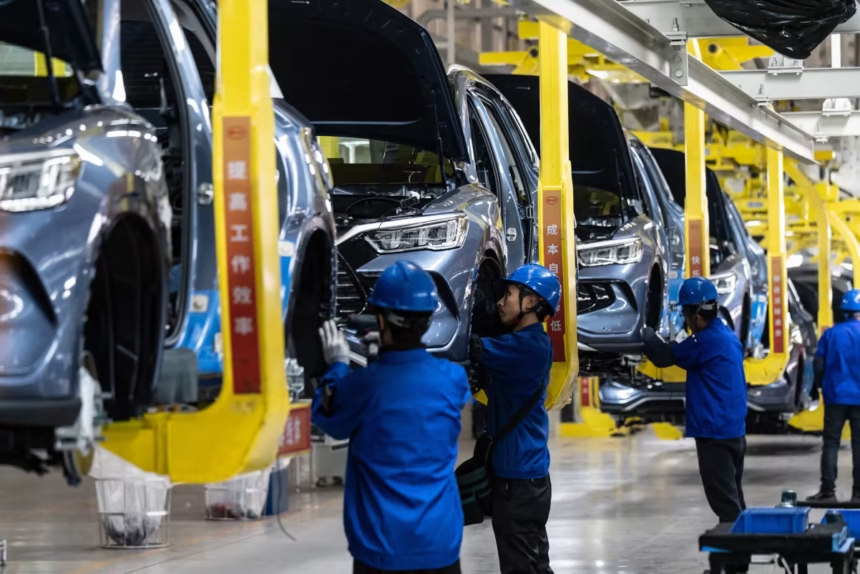
Chinese-made cars may arrive at American dealerships sooner than anticipated, a development that promises benefits for US consumers.
Despite being the world’s largest producer and exporter of vehicles, Chinese automakers have been largely absent from the US market due to high tariffs and strained US-China trade relations. However, experts predict this will change, with Chinese vehicles potentially appearing in US showrooms within the next five to ten years.Path to Entry: Building in the US
The key to market entry appears to be domestic production. According to Lei Xing, an independent auto analyst, “The ambition is there,” and multiple Chinese automakers have shown “readiness to come to the US, to build in the US,” even if it means constructing local factories instead of shipping from China.
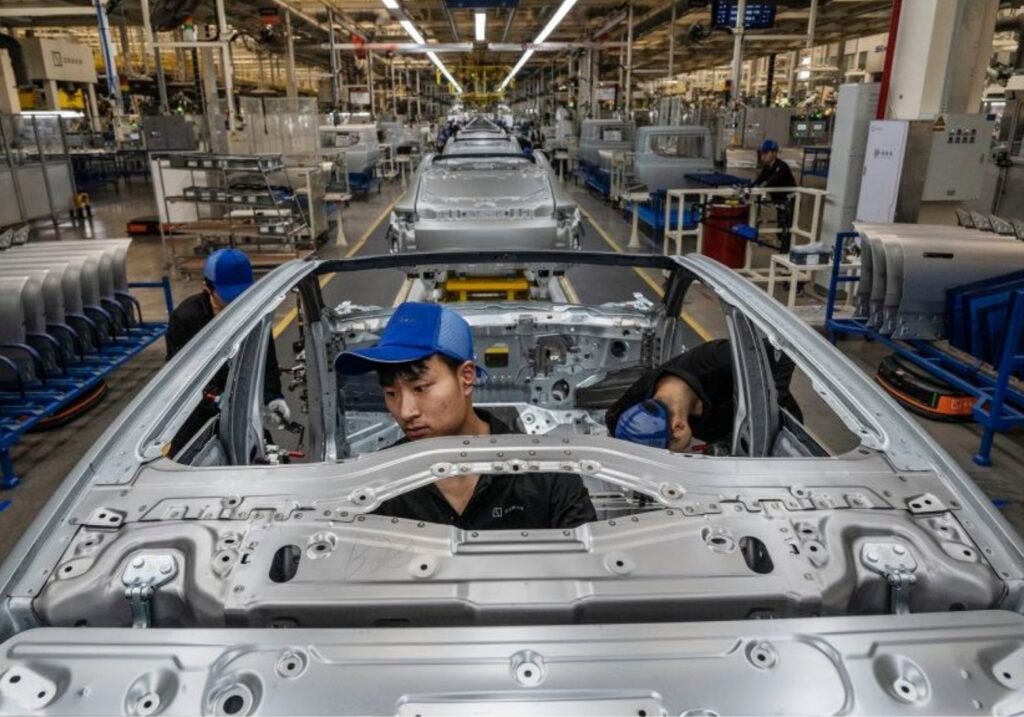
This move has received some support from US officials. While Chinese cars shipped to America face a hefty 100% tariff, former President Donald Trump recently welcomed Chinese brands that commit to building plants and creating jobs in the US. A White House official confirmed the administration “supports all investment into the United States as long as our national and economic security is not compromised.”Implications for Consumers and Competition

The entry of Chinese automakers is expected to intensify competition, offering American car buyers more choices, especially for Electric Vehicles (EVs), which should drive down prices.
However, this increased competition will inevitably put pressure on the profits and market share of existing US-selling car companies, potentially impacting the nearly one million people they employ.China’s Dominance in the Global Auto Industry



The arrival of Chinese automakers would further solidify China’s leading position in the global automotive sector.
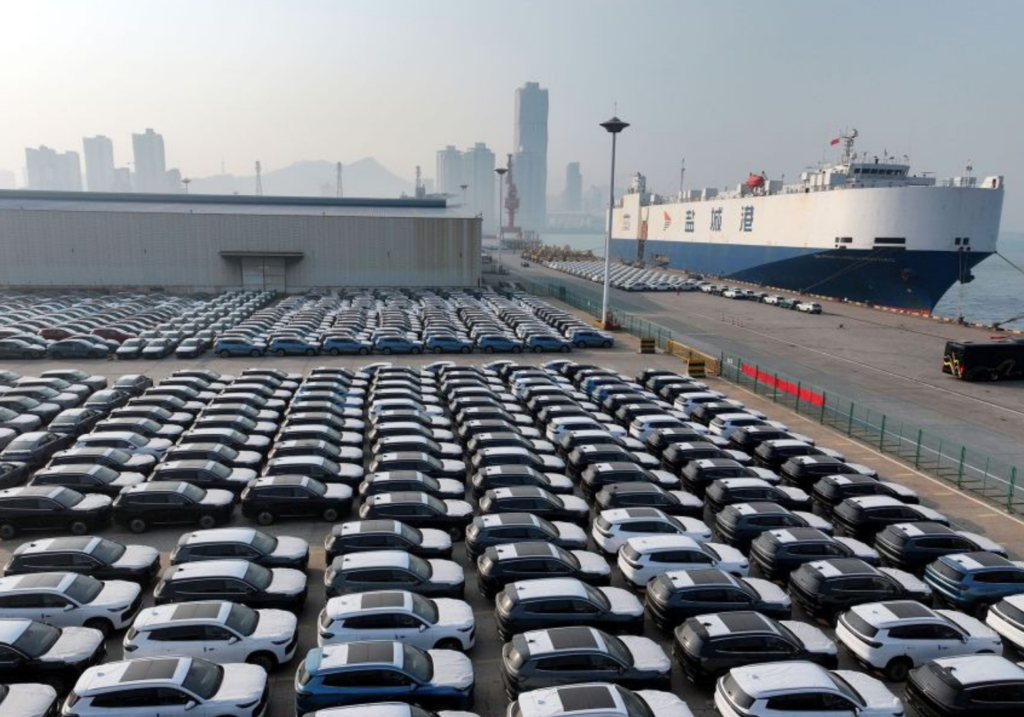
- Last year, China produced one-third of all cars worldwide, exporting over 8 million vehicles—a 30% increase from the previous year.
- In 2023, China surpassed Japan to become the world’s largest vehicle exporter.
- China is particularly strong in the EV market. Chinese automaker BYD recently overtook Tesla to become the world’s largest electric car company by volume.
Eyeing the Profitable US Arena
Building a US factory takes time, but leading experts agree that most Chinese carmakers are actively planning for the US market. Auto industry consultant Michael Dunne noted that “every automaker in the world looks at the United States market as the ultimate arena for triumph.”
The significant price difference makes the US attractive. The average price of a car exported from China last year was about $19,000, while the average new car sold in the US hovers around $50,000. Furthermore, American consumers are wealthier and buy larger, more expensive vehicles, making the US a highly profitable market.Early Steps and Potential Leaders



Some Chinese-owned companies have already established a presence. Volvo, owned by Chinese automaker Geely, built a plant in South Carolina in 2015. With a current $1.3 billion expansion, this facility could become a launching pad for Geely to build its Zeekr and Lynk & Co. brands for the US market. Geely is considered the best-positioned Chinese company to enter the US, with an announcement possibly within the next two to three years, according to Xing.Value Over Xenophobia
In Europe, Chinese automakers have already demonstrated their success is based on more than just low price; it’s about the quality and value of their vehicles.
Bill Russo, head of Automobility, noted that foreign brands have lost more than half their market share in China because domestic companies “just made better cars, and they made better technologies at affordable price points.”
The expansion abroad is also fueled by intense price competition among the over 100 domestic brands in China, combined with manufacturing overcapacity and sluggish consumer spending at home.
While Chinese companies may initially face skepticism from US buyers, Russo believes any concern over a car being “cheap” rather than simply “low-priced” can be quickly overcome. “Do Americans really care who made the car as long as it’s a good car? I don’t think they do,” he said. “The market cares about value for the money first. And xenophobia can only take you so far.”