






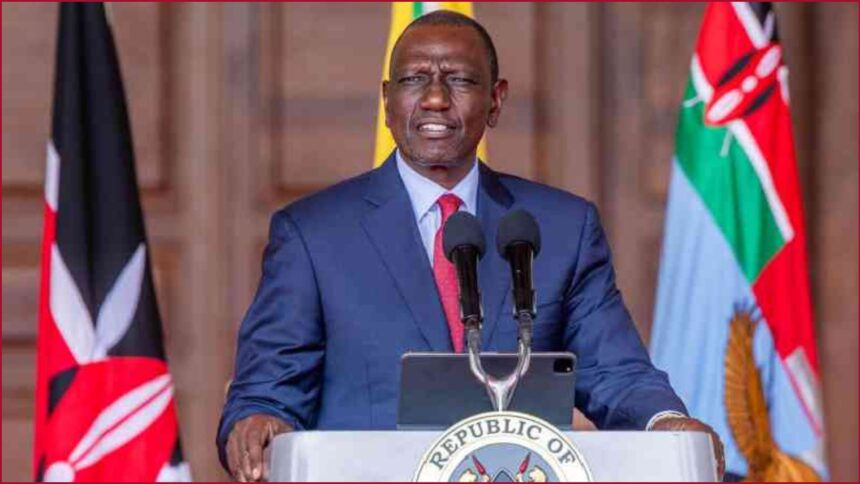
The East African Community (EAC) is facing a severe financial crisis, prompting Kenyan President William Ruto, the current Chair of the EAC Summit, to call an emergency meeting of regional Heads of State. The summit, scheduled to take place in Arusha, Tanzania, is focused on addressing a staggering $89.37 million funding shortfall that has crippled the operations of the bloc’s most critical institutions.
The crisis stems primarily from the failure of most member states to remit their mandated annual contributions for the 2025/2026 financial year. Out of the seven member states, only Kenya and Tanzania have fully paid their respective $7 million contributions, leaving the EAC Secretariat struggling to sustain basic functions.
Paralysis of Key Institutions
The immediate and most visible impact of this financial deficit has been the operational paralysis of key EAC bodies designed to underpin regional integration. Reports indicate that the East African Legislative Assembly (EALA), the legislative arm of the bloc, and the East African Court of Justice (EACJ), the judicial organ, are among the institutions most severely affected.
The inability to fund scheduled activities, parliamentary sessions, and court sittings undermines the very framework of the Community, stalling progress on critical regional initiatives ranging from common market protocols to security cooperation. The resulting operational slowdown risks eroding the significant economic and political gains made over the past two decades.

Agenda for the Arusha Summit
Leaders gathering in Arusha are expected to engage in high-stakes negotiations aimed at both immediate stabilization and long-term structural reform.
Key Issues on the Summit Agenda:



| Focus Area | Description/Goal |
|---|---|
| Immediate Funding Gap | Agreeing on urgent measures and a firm commitment timeline for the outstanding $89.37 million contributions to restore full functionality to paralyzed institutions. |
| New Funding Formula | Debating and potentially adopting a reformed financial mechanism to ensure more reliable and equitable contributions. The current formula, based on equal contributions, has been criticized as unsustainable for smaller or less economically robust members. |
| Preventing Operational Collapse | Instituting strict compliance and accountability measures, possibly including penalties or sanctions for member states that persistently default on their obligations. |
| Budget Rationalization | Reviewing the EAC budget structure to identify potential savings and ensure that funding is prioritized for core integration projects. |
Global Trade Implications
The financial instability of the EAC carries significant implications for global trade and investment in East Africa. The Community represents a market of over 177 million people, characterized by increasing cross-border trade, growing infrastructure links, and harmonized customs procedures under the EAC Customs Union.
A collapse or significant slowdown in EAC operations threatens to:
- Undermine Trade Facilitation: Delays in implementing agreed-upon customs protocols and standards due to underfunded regulatory bodies could increase the cost and time of doing business across borders.
- Deter Foreign Direct Investment (FDI): Investors are drawn to the stability and predictability offered by regional economic blocs. The current financial uncertainty and institutional paralysis introduce a level of risk that could cause international partners to defer or cancel investments.
- Stall Infrastructure Projects: Key regional infrastructure projects, vital for connecting markets and facilitating global supply chains, often rely on harmonized EAC policies and coordination, which are now jeopardized.
President Ruto’s urgent intervention highlights the gravity of the situation. The outcome of the Arusha summit will be critical in determining whether the EAC can overcome its most pressing existential threat and reaffirm its commitment to deepening regional integration and securing its role as a stable economic hub in Africa.