







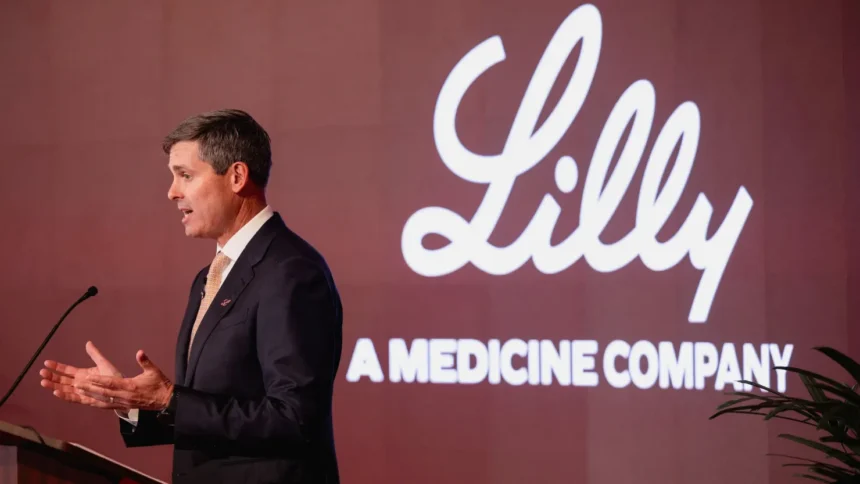
Pharmaceutical giant Eli Lilly announced Friday a significant investment of over $3.5 billion to construct a new manufacturing facility in Pennsylvania’s Lehigh Valley. This plant is crucial for producing the company’s upcoming generation of obesity treatments, including the highly anticipated experimental drug, retatrutide.
Focus on Retatrutide and Production Capacity
Retatrutide has garnered attention for demonstrating the highest weight loss observed in any late-stage trial to date. The added production capacity from the new Pennsylvania site is vital for Lilly’s long-term obesity strategy, which views retatrutide as a key pillar alongside its popular injection Zepbound and its forthcoming obesity pill.
Health experts suggest that retatrutide, which targets three gut hormones compared to the one or two targeted by existing treatments, could particularly benefit patients with severe obesity who require more substantial weight loss. Lilly is scheduled to release data from seven additional Phase 3 trials for the drug this year.

Part of Broader U.S. Manufacturing Expansion
This Pennsylvania facility marks the fourth in a series of new U.S. investments planned by Lilly. Since 2020, the drugmaker has committed $23 billion in investments, with an additional announcement in February 2025 detailing plans to spend at least $27 billion more on new domestic manufacturing sites. However, while President Donald Trump stated Thursday that Lilly CEO Dave Ricks mentioned an aim to build six U.S. plants, Lilly has not confirmed that number.



Construction of the Pennsylvania plant is expected to begin this year, with the site anticipated to be operational by 2031. It is projected to create 850 jobs—including engineers, scientists, and lab technicians—in addition to 2,000 construction jobs.
Industry Race to Boost Supply
Lilly and its main competitor, Novo Nordisk, have been heavily investing in expanding production capacity following previous supply shortages of their existing weekly injections in the U.S.
Maintaining a sufficient supply of upcoming drugs is central to Lilly’s effort to sustain its dominant position in the expanding GLP-1 market. Last year, Lilly surpassed Novo Nordisk to secure the majority market share for the first time.



Novo Nordisk, however, is aiming to close the gap, having recently launched the first-ever GLP-1 pill for obesity this month, which has already seen a rapid increase in U.S. prescriptions. Lilly also has its own pill, orforglipron, which may receive approval and launch later this year.
Tariff Concerns Eased
The push by drugmakers to boost U.S. production comes amid past threats by President Trump to impose tariffs on imported pharmaceuticals. However, concerns about these potential tariffs have lessened following voluntary drug-pricing agreements with the Trump administration in recent months, which grant Lilly, Novo Nordisk, and other companies a three-year exemption from the levies.