






China’s path to modernization is heavily guided by the systematic implementation of its five-year plans, a crucial framework for understanding the governance strategy of the Communist Party of China.
To shed light on this strategy and address international misconceptions, People’s Daily Online has launched the “Understand China” series, focusing on the upcoming 15th Five-Year Plan (2026-2030). The program examines China’s development planning, governance model, and the opportunities it presents, seeking to foster mutual understanding.

In a recent episode, Ji Deqiang, a professor and director at the National Centre for Communication Innovation Studies at the Communication University of China, engaged in a dialogue with Martin Lockett, a professor in Strategic Management at Nottingham University Business School China. Their discussion centered on the impact of China’s push for scientific and technological self-reliance on its economic growth and the global innovation landscape.
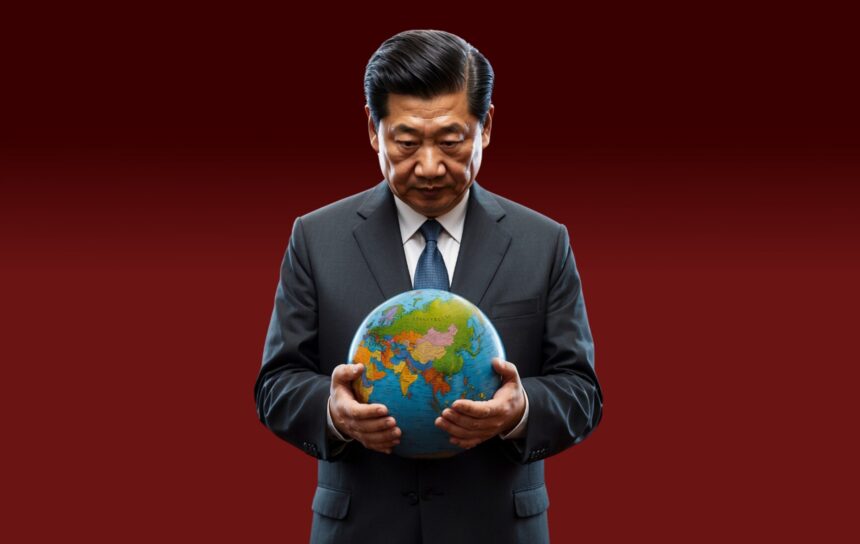
Is China Poised for Global Domination?

Addressing international anxieties about China’s technological advancements, Lockett attributed these concerns partly to China’s notable success in manufacturing and other sectors. He argued that the “China threat” narrative is overblown, stemming from either outdated perceptions or a lack of clear communication.
Lockett interpreted China’s focus on high-level sci-tech self-reliance as a strategy of “ambidexterity,” a concept drawn from international business research. He explained that this policy is both reactive and proactive, aiming to:




- Ensure Resilience: Develop the capability to operate critical sectors—including products and services—without absolute dependence on a single or limited number of external sources.
- Promote Cooperation: Simultaneously pursue productive collaboration for a thriving global economy. Lockett emphasized that the challenge lies in achieving both goals concurrently.
Ji Deqiang firmly stated that China has no ambition for global dominance. He highlighted China’s “sense of responsibility,” which manifests not only in developing a high-tech-supported digital economy domestically but also in aiding developing nations with their digital economies and sharing market benefits. While stressing the necessity for a major country like China to maintain core technological capabilities for security and industrial risk mitigation, Ji clarified that sci-tech self-reliance does not imply closedness.

Ji further emphasized that China seeks international collaboration on most market issues. He views the accelerated drive toward high-level sci-tech self-reliance as both a response to historical context and a foundation for enhanced, higher-quality multilateral cooperation.
The guests cited several tangible examples to demonstrate that China’s scientific and technological development is characterized by a commitment to self-reliance alongside a strong orientation toward openness and international cooperation. These include:
- The De Aar Wind Power Project in South Africa, which alleviates local power shortages.
- The global sharing of the BeiDou Navigation Satellite System.
- International partnerships involving the Chinese space station.
- Collaboration with other countries in the intelligent vehicle sector.