






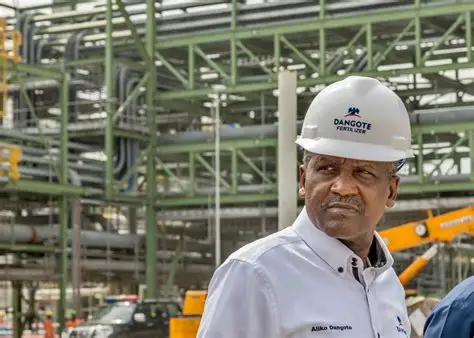
Lagos, Nigeria – February 18, 2026 – Aliko Dangote, the Nigerian industrialist, continues to solidify his position as Africa’s wealthiest individual, with a reported net worth of $31.9 billion, according to the latest figures from the Bloomberg Billionaires Index. His colossal fortune stands as a testament to a long-term strategy focused on large-scale industrial production, strategic reinvestment, and aggressive expansion across essential sectors, notably eschewing the tech boom that has defined many contemporary billionaire profiles.
The Pillars of Prosperity: Cement, Fertilizer, and Oil
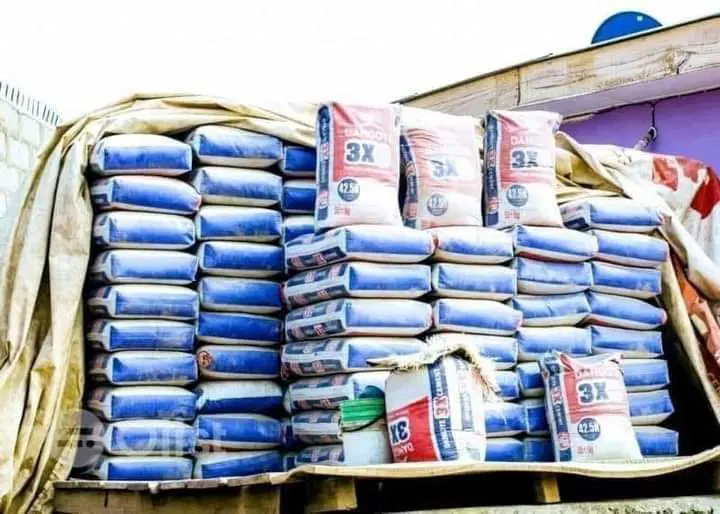
Dangote’s wealth is overwhelmingly concentrated in three core industries: cement, fertilizer, and the recently commissioned oil refining sector. Unlike global peers whose wealth often derives from intangible assets and intellectual property, Dangote’s empire is built on tangible, foundational goods crucial for infrastructure and agriculture.
Fortune Composition Breakdown
The vast majority of Dangote’s net worth is tied directly to his controlling stakes in key enterprises, illustrating a profound commitment to ownership and operational control.
| Asset | Industry | Ownership Stake | Contribution to Net Worth (Estimated) |
|---|---|---|---|
| Dangote Refinery | Oil & Gas | 92.3% | Major |
| Dangote Cement | Construction/Infrastructure | 86.0% | Major |
| Dangote Fertilizer | Agriculture | Significant | Moderate |
| Other Ventures | Various | Varies | Minor |
Note: Specific valuations are dynamic, but the ownership stakes provide the structural basis for his wealth.

Statistical Illustration: Dangote’s Core Holdings
Dangote Cement, a regional powerhouse, forms the bedrock of the group’s initial success. However, the recent $20 billion Dangote Refinery—one of the world’s largest single-train refineries—represents the future trajectory of his wealth, promising to reshape West Africa’s energy market.
[Chart Placeholder: A pie chart illustrating the estimated percentage distribution of Aliko Dangote’s wealth across his three core sectors: Cement, Refinery, and Fertilizer.]



The Non-Tech Billionaire Blueprint
A striking feature of the Dangote success story is its foundation outside the highly volatile and rapidly evolving technology sector. While global billionaires like Jeff Bezos and Mark Zuckerberg leveraged digital innovation, Dangote chose a path focused on solving fundamental market needs within the African context:
- Infrastructure Deficit: Cement production addresses the continent’s critical need for roads, buildings, and ports.
- Food Security: The massive fertilizer complex tackles agricultural output and food independence.
- Energy Independence: The refinery aims to curb reliance on imported petroleum products, a significant economic drain on Nigeria and the region.
“His strategy is one of vertical integration and import substitution,” noted Dr. Ngozi Okafor, an economics lecturer at the University of Lagos. “He identifies a major product being imported, builds the capacity to produce it locally at scale, and dominates the market. It’s a classic, capital-intensive industrialist model, proving that essential manufacturing remains highly lucrative.”
Strategic Imperatives: Reinvestment and Expansion
Dangote’s primary wealth-building mechanism has been a relentless commitment to reinvestment. Rather than extracting profits for consumption, capital has been systematically ploughed back into new projects, facilities, and market expansion.
Key Elements of the Strategy:


- Industrial Scale: Building plants and facilities that are large enough to achieve significant economies of scale, often requiring massive initial capital investment.
- Pan-African Footprint: Expanding operations (especially cement) across multiple African nations, mitigating single-country political and economic risks.
- Diversification of Core Products: Moving from reliance on cement to essential inputs like fuel and fertilizer, creating a robust, interconnected industrial ecosystem.
Succession and Sustainability: Leveraging the Family Network
A crucial, yet often understated, component of Dangote’s long-term sustainability strategy is the utilization and training of close family members for key executive and directorial roles. This approach ensures continuity, alignment with the core industrial vision, and trust at the highest levels of management.

Strategy: Integrating Close Family Through Training
The strategy involves a systematic, multi-stage process designed to prepare family members not just for ownership, but for competent operational leadership:
| Stage | Activity | Goal |
|---|---|---|
| I. Foundational Placement | Early-career rotational roles across different business units (e.g., finance, operations, sales). | Develop comprehensive understanding of the business mechanics and cross-functional dependencies. |
| II. Executive Education | Sponsorship for top-tier global business programs (e.g., Harvard, Wharton) coupled with specific courses on industrial economics and large-scale project management. | Instill world-class governance and modern business practices, complementing on-the-job experience. |
| III. Strategic Mentorship | Direct, sustained mentorship under Aliko Dangote and key non-family executives, focusing on high-stakes decision-making and negotiation. | Transfer institutional knowledge, risk management philosophy, and the “Dangote way” of industrial expansion. |
| IV. Leadership Vetting | Placement in a critical, high-visibility role (e.g., country manager, head of a subsidiary) with clear performance metrics before elevation to the main board. | Prove competence and earn the respect of non-family employees and stakeholders. |
This deliberate integration of trusted family members into the operational fabric is intended to safeguard the continuity of the Group’s aggressive reinvestment and expansion strategy well into the future, ensuring that the legacy of a $31.9 billion fortune built on tangible assets continues to shape Africa’s economic landscape.