








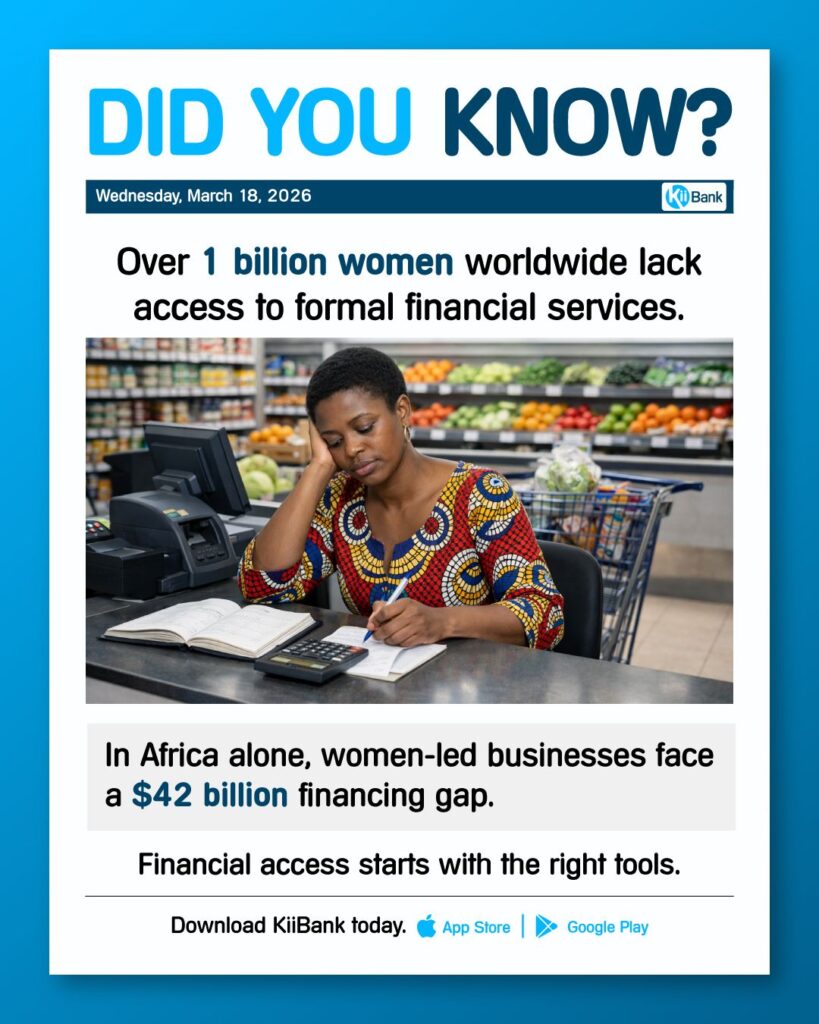
Over 1 billion women worldwide still lack access to formal financial services.
In Africa alone, women-led businesses face an estimated $42 billion financing gap.
These are not just statistics. They reflect a structural reality.
Across markets and communities, women are actively building businesses — trading, selling, managing households, and creating value daily.
But the systems meant to support them are often not designed for them.
Limited access.
Rigid requirements.
Processes that assume formal structures where informal economies dominate.
So women adapt.
They rely on cash.
They depend on informal networks.
They operate outside systems that should be enabling them.
And the result is a persistent gap — not in ambition, but in access.
Financial inclusion is often discussed at a high level.
But in practice, it comes down to something very simple:
Do the tools actually work for the people who need them most?
Because access is not just about having an account.
It is about having systems that are usable, reliable, and aligned with how people actually live and do business.
Until that gap is addressed, the numbers will remain the same.
Financial access does not start with statistics — it starts with building systems that people can actually use.
hashtag#FinancialInclusion hashtag#WomenInBusiness hashtag#FinTechAfrica hashtag#DigitalBanking hashtag#KiiBank