







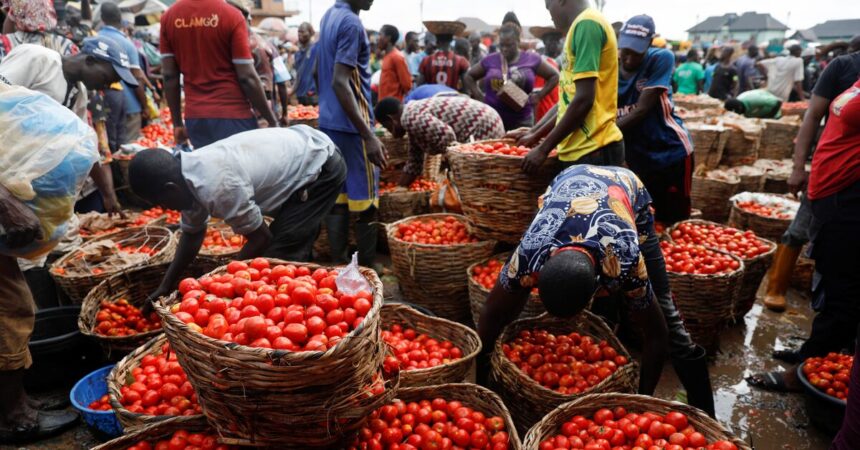
Nigeria’s agricultural sector faced a staggering economic setback in 2025, losing an estimated $2.3 billion to $3.3 billion due to widespread post-harvest inefficiencies. This financial drain is compounded by the colossal volume of food waste, with industry leaders reporting losses reaching up to 40 million metric tonnes (MT). The primary drivers of this crisis are systemic failures in cold storage infrastructure and logistics, a problem directly tied to the nation’s persistent power supply deficits. These findings underscore an urgent need for substantial national investment to stabilize farmer incomes, protect domestic food security, and maximize the agricultural sector’s potential contribution to the GDP.
Statistical Analysis of 2025 Post-Harvest Losses (PHL)
| Metric | Estimated Value | Source/Implication |
|---|---|---|
| Monetary Loss (Range) | $2.3 Billion – $3.3 Billion | Direct financial impact on the economy; equivalent to several percentage points of agricultural GDP. |
| Volume of Food Wasted | Up to 40 Million Metric Tonnes | Represents a massive failure in the value chain; enough food to potentially feed millions. |
| Primary Drivers of Loss | Poor Cold Storage and Logistics | Accounts for the majority of spoilage and damage, particularly for perishable crops. |
| Underlying Causal Factor | Lack of Reliable Electricity | The critical bottleneck is preventing effective cold chain operation and processing. |
The reported monetary loss range of $2.3 billion to $3.3 billion highlights the severe economic leakage within the agro-business value chain. This figure not only represents lost revenue for farmers but also increased prices for consumers due to reduced supply, ultimately fueling inflation and hindering the nation’s economic diversification goals. The 40 million MT of wasted food is a stark indicator of resource misallocation, wastage of land, water, labor, and capital invested in production.
Root Cause Analysis: The Power-Logistics Nexus
The analysis confirms that the post-harvest crisis is not primarily a production issue but rather a structural problem rooted in infrastructure.
The Critical Role of Power Failure
The single most significant factor driving the high rate of PHL is the unreliable and insufficient supply of electricity. Perishable crops—fruits, vegetables, dairy, and meat—require a continuous cold chain to maintain quality and shelf-life post-harvest.

- Cold Storage Gap: Without consistent power, existing cold storage facilities are either inoperable or prohibitively expensive to run via private generators, forcing farmers to sell immediately at distressed prices or face spoilage.
- Processing Stagnation: Lack of power also cripples local processing industries that could convert surplus fresh produce into less perishable goods (e.g., canned foods, dried goods, purees), thereby extending their market viability.
The gravity of this situation was recently underscored by Nigeria’s leading industrialist, Aliko Dangote, who publicly expressed profound concerns about the impact of power failures on the national economy and called for an urgent national review of the power sector. Dangote’s involvement highlights that the energy crisis is now a top-tier concern affecting every sector, including agriculture.
Logistics and Market Access Failures
Compounding the power issue is the poor state of logistics and transportation infrastructure. The long transit times, poor road networks, and lack of refrigerated transport mean that even products harvested efficiently are often damaged or spoiled before reaching distant markets or processing plants. The inefficiency in logistics exacerbates the PHL caused by the lack of cold storage, creating a bottleneck that severely limits farmers’ access to lucrative urban markets.



Expert Recommendations and Policy Imperatives
Agro-business experts and policymakers universally agree that the current scale of loss is unsustainable and poses a direct threat to national food security, particularly in a period of high population growth.
Call for Urgent National Investment
Experts are urging the government to prioritize and mobilize substantial national investment across three key areas:
- Cold Chain Infrastructure: Mandating and funding the establishment of decentralized, solar-powered, or grid-independent cold storage hubs in major food production clusters. This shifts the focus from relying solely on the national grid to implementing sustainable, localized energy solutions.
- Rural Electrification Focus: A focused, expedited effort to stabilize and improve power supply, specifically targeting agricultural value chains and processing zones. This aligns directly with Dangote’s expressed national concern.
- Logistics Modernization: Investment in dedicated agricultural transport corridors, including road improvements and incentives for private sector adoption of refrigerated trucks and modern warehousing technologies.
These strategic investments are crucial not just to recover the lost billions but, more importantly, to protect farmer income, incentivize greater production, and ensure stable, affordable food supplies for Nigeria’s population. Failure to address this $3.3 billion leakage risks deepening poverty among rural farming communities and jeopardizing the nation’s long-term economic stability.